
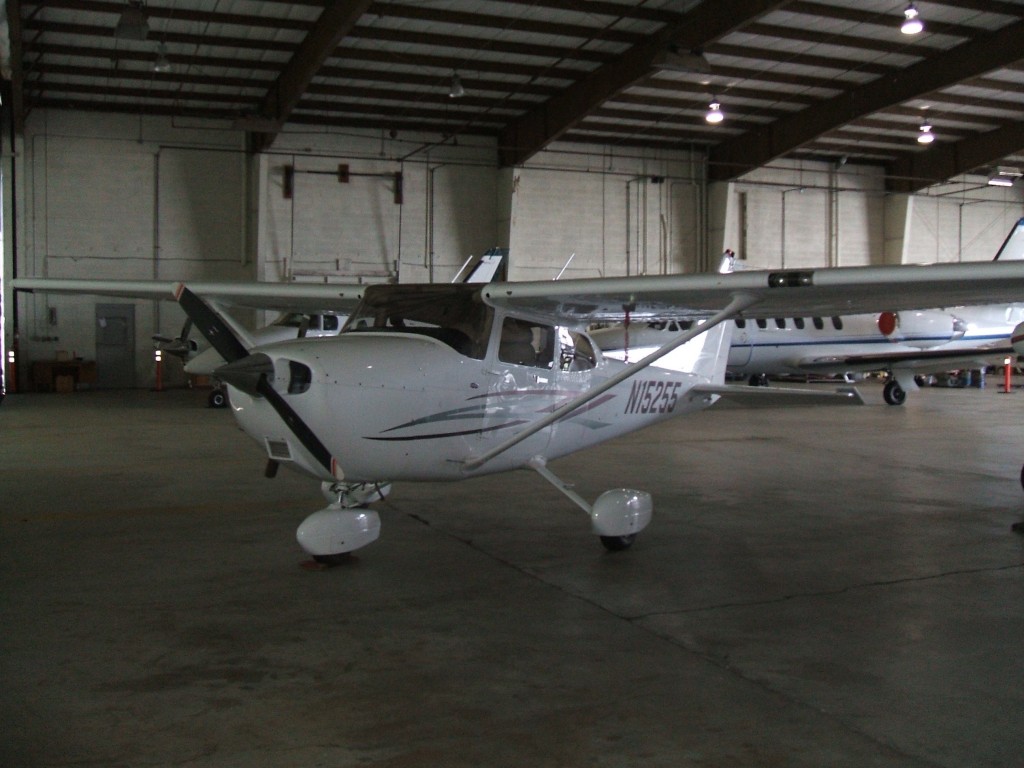
After my recent trip to Oshkosh I returned home with a new goal for the next year or so. To make a long story brief, I spent a lot of time walking through the vintage airplanes while I was there. This wasn’t intentional, it just happened. Why did it happen? Well, I really like Stearmans, Old Cessnas, Wacos, and all manners of aged aircraft. Something that I saw over and over again was people enjoying an aircraft that they own. I think that’s what I was most drawn to.
To me, the idea of owning a personal aircraft is something that doesn’t seemed out of the question for the average person. When you consider that there are aircraft that can be flown a lot for less than $500 a month, the idea really isn’t that unreasonable. Unfortunately, when I make this opinion known, most ‘normal’ people flip. In the interest of full disclosure, this group includes my wife. Best I can tell, these people view aircraft as very expensive luxury items. Incidentally, they aren’t wrong to a certain extent. I mean after all, there are 3 million dollar jets that I would love to have. When I talk about buying a plane, however , I’m not talking about the 3 million dollar jets or even a half million dollar Cirrus or Bonanza; I’m talking about something cheap to buy, own, and operate. Something that gets the job done. A 50 year-old Cessna 172 or a 60 year-old Champ come to mind.
So what to buy? Well, that’s where the ever elusive ‘mission’ comes into play. The generally accepted rule of thumb here is buy a plane that meets your requirements 90% of the time. In other words, if you are looking for a plane to conduct local sight-seeing for two passengers, don’t buy an L-39. Buy the Cub or Champ that cries out for that mission.
So what should you consider when developing your mission?
- Budget
- Intended Use
- Performance Requirements
- Personal Preferences
I include the budget first, because I don’t think it does you any good to look at things you can’t afford. When that happens, suddenly you are bypassing perfectly adequate 172s trying to find a Cirrus. So first things first, develop that budget. Look at purchase price, financing (if necessary), operating costs (such as fuel and oil), insurance, storage, and the oops fund. What’s the oops fund? It’s where you will get the $15000 to overhaul the engine when the time comes or the $500 for the vacuum pump that fails next month. For more information on this, see What2Fly.com.
Once you know what you can afford, think about what you do. Try not to think about things you “want” to do, this can lead to mission movement. In other words, suddenly buying a plane to get an instrument rating turns into a Pitts S2. I’ve suffered from this a fair bit in the last little bit. All it takes is one little loss of focus, and I’ve found a list of primarily single-seat aerobatic aircraft that would be great if I actually flew aerobatics. That won’t help me get an instrument rating, and I don’t even know how to do any aerobatics. So write down what you actually do. Now, to offer a slight modification, if you are like me and there are feasible desires, such as semi-local cross-countries, feel free to consider them.
It is also important to consider performance when looking at aircraft. The important areas to me are takeoff and landing, cruise, fuel economy, and capacity. It doesn’t really do you any good to buy an aircraft that you can’t operate anywhere near your home. The big ones here are items like density altitude. Be aware of any unique considerations so that you avoid creating a ramp-queen because you bought a Cessna 150 to fly out of a field with regularly high density altitudes. Cruise and fuel economy are more about comfort than anything. If you are taking longer trips, something with a little speed can really improve the trip. Meanwhile, fuel-economy is important for financial comfort. You probably don’t want to trade a Cessna 182 that burns 10 GPH and cruises at 130 knots for a Bonanza that does 140 knots, but burns 25 GPH. Finally, capacity, or how much the plane can carry. This is pretty important in defining the roles the aircraft can perform. For example, if you and two friends take a monthly trip 200 miles away for a pancake breakfast, it looks like a two seat aircraft is out of the equation. Similarly, if you are looking for a plane to fly you, your wife, and her shoe collection, you might want something with a little more payload capacity than a Champ.
The last, and most subjective area to consider is preferences. I’ve done quite a bit of studying on buying an aircraft, and I never really noticed how this plays out. You see, I just like planes; I don’t really care how the wings are attached or where the third wheel is. Then I recently read through Airplane Ownership and the author mentions this specifically and it made me think. So just think about your preferences and how you can meet them with an affordable aircraft to call your own.
I want to finish this out by doing everything above for my situation. So here it goes. We can easily swing $500 or so a month on flying. I know because I was doing it during my primary training. At one point I was stretching it to $1000. So if we consider the $500 a month goal, I’m looking at about a 25,000 dollar plane. So I know what price range to look for. So what am I going to do with the plane? It will see use primarily as an instrument trainer and time-builder with a monthly cross-country to some nearby field for food or fun. So I’m looking for something that cruises decently fast, but I’m seeking bare minimum fuel consumption and maintenance costs. I prefer something common, but with a little personality so maybe vintage. So to boil that down to one sentence, I’m looking for an IFR certified aircraft for training and 200 NM cross-countries with 1 or 2 people that sips fuel and is cheap to maintain.
From here I can hit the internet, bulletin boards, or grapevine and find the plane. A quick search on Trade-A-Plane, Barnstormers, and Controller leads me to older Cessna 172s, Piper Cherokees, and Beech Musketeers. Those are some pretty basic aircraft, not a lot of moving parts, and best of all, long production runs mean good parts availability. All that adds up to a pretty inexpensive plane.